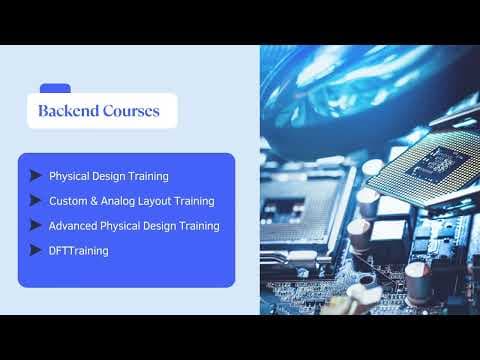
Master the art of integrating complex RTL modules into complete SoC designs with personalized 1-on-1 mentorship. This hands-on training equips you with real-time industry practices, tool usage, and debugging techniques essential for seamless RTL integration. Ideal for VLSI aspirants and working professionals aiming to specialize in SoC design, this course offers project-based learning, practical exposure to bus protocols, and detailed insights into design signoff flows. Build your confidence and expertise to take on integration roles in leading semiconductor companies.
Next Batch
1-1 Dedicated Mentor Support
24/7 Tool Access
Multiple Mock Interviews
Industry Standard Projects
Support with Resume Update
RTL Integration 1-1 Training Overview
The RTL Integration 1-1 Training is a personalized, industry-aligned program designed to build your expertise in integrating Register Transfer Level (RTL) blocks into a complete System-on-Chip (SoC). This course bridges the gap between RTL design and full-chip implementation by offering hands-on learning with real-time SoC scenarios, interface protocols, and tool flows. You will learn how to manage IP-level and subsystem-level integration, resolve signal and connectivity issues, handle clock and reset domain crossings, and verify design correctness at each integration stage. The training also focuses on industry practices including floorplan-aware integration, timing constraints, and DFT-aware planning. Whether you're a fresh graduate, RTL designer, or someone switching domains, this course will help you build a strong foundation in chip-level RTL integration with one-on-one expert guidance, tool exposure, and project-driven learning.
- Number System
- Combinational logic
- Sequential logic

Key Features
Who All Can Attend This RTL Integration 1-1 Training?
The RTL Integration 1-1 Training is ideal for anyone aiming to specialize in full-chip or subsystem-level SoC design and integration. Whether you're a student, professional, or domain switcher, this course is designed to build practical skills for real-world projects.Pre-requisites To Take RTL Integration 1-1 Training
- Basic understanding of digital electronics and logic design
- Familiarity with Verilog or VHDL for RTL design
- Knowledge of SoC concepts and standard interface protocols (AXI, AHB, APB) is a plus
- Exposure to Linux and scripting (like TCL/Perl/Shell) is helpful but not mandatory
High Demand for RTL Integration 1-1 Training
Know about the Growing VLSI industry
RTL Integration Engineers who master clock/reset domain crossings, bus protocol connectivity, and signoff checks are in high demand. Early-career engineers with solid integration skills often see faster promotions into subsystem lead roles. Senior engineers commanding cross-team integration flows can move into architecture or technical lead positions.
₹5 L
₹7 L
₹10 L
₹15 L
₹22 L
₹30 L

Mode of Training
Next Batch
1-1 Dedicated Mentor Support
24/7 Tool Access
Multiple Mock Interviews
Industry Standard Projects
Support with Resume Update

- Learn in real-time with instructor-led sessions
- Flexible access from anywhere
- Recorded sessions available for revision
- Training on industry-standard tools
- Get certification after completion

- Self-paced learning as per your flexibility
- Industry-aligned learning modules
- Certification after course completion
- Access to structured video lessons and materials
- Track your progress step by step
- Access to learning materials for more than 1.5 years
RTL Integration is one of the most critical stages in SoC design, acting as a bridge between IP development and full-chip implementation. This RTL Integration 1-1 Training is structured to provide practical, tool-based experience in integrating complex RTL blocks, ensuring connectivity, and preparing designs for synthesis and backend flows. Attending this training allows learners to build the confidence and technical expertise required for real-world SoC projects. With personalized mentoring, participants gain an edge in understanding signal-level design, clocking strategies, and integration-specific verification practices — making them highly employable in the semiconductor industry.
Career Path
Learning Path

At VLSIGuru, we believe that education should lead to meaningful employment. Our training programs are designed not just to impart technical excellence, but also to bridge the gap between academic learning and industry demands. With a strong network of hiring partners and a proven track record, we ensure that our students are career-ready.
Placement Highlights
- Industry-aligned curriculum
- Hands-on projects and case studies
- Communication skills
- Resume building and interview preparation
- Technical and HR mock sessions
- Aptitude and domain-specific test series
- Regular drives and exclusive hiring events with partner companies
- Resume building and interview preparation

At VLSIGURU, we provide industry-focused VLSI training and guidance that helps students and professionals build strong technical skills and succeed in their careers. Our programs are designed to be practical, flexible, and aligned with current industry requirements.
Student Reviews


Frequently Asked Questions
A personalized, mentor-led course that teaches you how to integrate RTL blocks into full SoC designs, handling connectivity, clock/reset domains, and signoff checks.
Ideal for RTL designers, SoC/IP integrators, verification engineers, physical-design engineers, and anyone looking to bridge RTL design and backend flows.
No—basic RTL knowledge (Verilog/VHDL) and digital logic understanding are sufficient. The course adapts to your background and ramps you up on SoC integration concepts.
Industry-standard EDA environments (e.g., Synopsys DC, Cadence Genus, PrimeTime) and scripting languages (TCL, Perl/Shell) for automated integration and signoff checks.
Yes—each session includes guided, project-driven exercises with real-world integration scenarios and live debugging of connectivity or CDC/RDC issues.
Absolutely—1-on-1 format lets you bring your own RTL code, constraints, or SoC use-cases for tailored guidance.
Flexible—most learners complete core integration skills in 8–12 sessions, but you can extend based on your learning pace and project scope.
Yes—a digital certificate is issued upon completion, highlighting your mastery of RTL-to-SoC integration methodologies.
Live online via Zoom/Teams with screen sharing, or in person when feasible. Sessions are recorded for your review.
You’ll gain immediately applicable skills valued by semiconductor companies, reduce onboarding time for integration roles, and stand out in interviews by demonstrating real SoC integration expertise.
© 2025 - VLSI Guru. All rights reserved
Explore a wide range of VLSI and Embedded Systems courses to get industry-ready.
50+ industry oriented courses offered.

Explore a wide range of VLSI and Embedded Systems courses to get industry-ready.
50+ industry oriented courses offered.